| Background of Discussion
To address the digital divide and promote equity and inclusion as we realize the digital education transformation, this session will broadly discuss how we can leverage AI to realize education for all, including the use of AI in education, effectiveness analysis, evidence-based policy formulation, and global collaboration.
| Session Objectives

This session aims to...
1. identify key areas where global collaboration can significantly enhance the adoption and impact of AI in education, including knowledge sharing, policy formulation, capacity building, technology transfer, and addressing ethical issues.
2. share promising experiences and lessons for global collaboration in leveraging AI in education and/or digital education.
3. explore the anticipated roles and responsibilities of the Global Education Innovation Alliance(GEIA) to promote and support global collaboration in the use of AI for education.

| Discussion Points
1
- Discuss the importance of leveraging research and knowledge exchange among countries, international organizations, and the private sector.
- Explore strategic public-private-academic partnerships to address shared challenges and capitalize on advantages of AI in education.
- Discuss how to establish key performance indicators (KPIs) for monitoring and evaluating (M&E) the outcome of AI-supported education.
2
- Discuss the direction for developing policies and guidelines through bilateral or multilateral policy collaboration for successful adoption of digital technology.
-Discuss how to create an enabling environment for AI in education by addressing digital infrastructure, data management and security, and capacity building.
- Explore the policy support measures for building ecosystems for AI in education in partner countries.
3
- Discuss the importance of engaging and empowering teachers and students in shaping future education with AI.
- Highlight the importance of enhancing international cooperation to share knowledge and emerging good practices and explore concrete measures to utilize AI in education for both teachers and students.
| Speaker

[Moderator]
Karthik Krishnan
CEO, IFFEd

[Panel]
Charles North
Deputy CEO, Global Partnership for Education

Cristian Aedo
Practice Manager for Education of East Asian Pacific Region, World Bank)

Sungsup Ra
Former ADB Deputy Director General, Sectors Group

Yuhyun Park
CEO, DQ Institute

Alexis Kim
Incoming Professor,POSTECH

Strengthening Human Character and Civic Competencies in the Digital Age
This session explores strategies to strengthen students' emotional and physical well-being, which are at risk of weakening in the digital age. It also examines concrete measures for after-school care, including the expansion of “Neulbom Schools.”
In addition, it proposes ways to enhance non-cognitive competencies such as arts education, human rights education, and global citizenship education, and advocates for the expansion of digital literacy education.

- Explores support strategies for students’ emotional and physical well-being in the digital era.
- Discusses whether Korean society provides a supportive environment for human character education.
- Discusses how to strengthen education on democracy, human rights, the environment, and history.
- Explores strategies for activating global citizenship education.
- Proposes the expansion of digital literacy education.
- Discusses ways to integrate and support these efforts within the formal school curriculum.

[Moderator]
Ko Hye-Won
President of the Korea Research Institute for Vocational Education and Training (KRIVET)

[Presenter]
Kim Geo-Sung
Visiting professor at Yonsei University
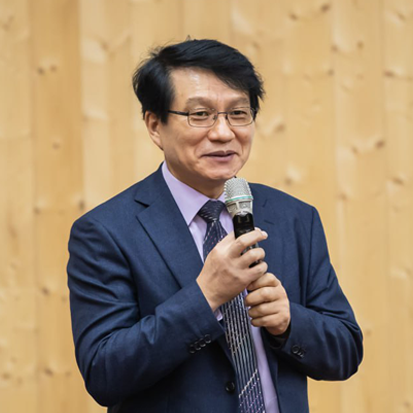
[Panel]
Kim Won-Joong
Professor of Classical Chinese Education at Dankook University

[Panel]
Ma Dong-Hoon
Professor of Media Studies at Korea University

[Panel]
Seo Hyun-Sook
Director of the Division of Intellectual Solidarity at the Korean National Commission for UNESCO

[Panel]
Lee Da-Jeong
Teacher of art